Beyond Security: How Agentic AI is Redefining Infrastructure Operations

April 23, 2026
Artificial Intelligence is rapidly reshaping infrastructure operations. Much of the early focus has been on transforming security operations including automating threat detection, accelerating response times, and reducing security analyst fatigue. While these advancements are essential, they address only part of the problem. Modern enterprises operate highly distributed environments where network performance, application delivery, and user experience are just as critical as security. Limiting AI transformation to security operations alone is no longer sufficient.
Enterprises today require a unified operational model that spans network operations, security enforcement, user experience, and infrastructure management. The real opportunity is not just to make security teams more efficient, but to transform how the entire infrastructure operates.
Versa Networks is enabling this broader transformation through the combination of Agentic AI and Zero Trust Model Context Protocol (MCP). This approach redefines how enterprises interact with and manage their infrastructure by introducing intelligence, automation, and governance across every operational domain.
From Reactive to Autonomous Operations
For decades, enterprise operations have relied on manual processes supported by incremental automation. Network and security teams spend significant time troubleshooting issues, correlating logs, validating configurations, and executing changes. While automation has improved efficiency, it has not eliminated complexity. Engineers remain deeply involved in day-to-day operations, and scaling these processes becomes increasingly difficult as environments grow more distributed.
Agentic AI introduces a fundamental shift. Instead of relying on humans to initiate and execute actions, AI agents continuously monitor infrastructure, analyze telemetry, make decisions, and execute actions in real time. These agents are dynamic and context aware. They adapt to changing network conditions, user behavior, and threat landscapes.
This model transforms operations from reactive troubleshooting to proactive and predictive intelligence. AI agents correlate telemetry across WAN, LAN, cloud, and security domains. They detect anomalies, predict failures, validate configurations, and optimize performance continuously. This significantly reduces operational overhead and improves responsiveness across the organization.
However, this shift introduces new challenges. AI agents interacting directly with enterprise systems can create risks such as unauthorized access, privilege escalation, and unintended configuration changes. Without proper governance, automation can amplify risk instead of reducing it.
Zero Trust MCP: The Foundation for Secure Actions Triggered by Agentic AI
Zero Trust MCP addresses these challenges by introducing a secure and controlled framework for AI-driven operations. It is designed to ensure that every AI-driven action is authenticated, authorized, and governed. At the core of Zero Trust MCP is a brokered execution model. AI agents do not directly interact with enterprise systems. Instead, all actions are routed through a centralized control plane.
This architecture ensures that AI remains assistive and controlled rather than autonomous without oversight. It prevents direct AI-to-system execution and eliminates the risks associated with uncontrolled automation. Zero Trust MCP introduces several key capabilities:
- Every action is validated against policies before execution.
- Access is controlled through role-based permissions.
- All actions are logged and auditable.
- Execution is separated from intent, ensuring safe operations.
This model enables enterprises to confidently adopt AI-driven operations without compromising security or governance.
Versa Verbo: Operationalizing Agentic AI
Versa Verbo is the platform that brings this architecture to life. It is not a traditional chatbot or static assistant. It is a multi-agent orchestration system designed to transform how enterprises operate their networks and security environments. Verbo acts as a coordination layer between users, AI agents, and enterprise systems. When a user submits a query, it is processed through a centralized router. This router determines which specialized agent should handle the request.
These agents include:
- Troubleshooting agents that follow structured workflows.
- Documentation agents that retrieve relevant information.
- Execution agents that trigger controlled actions through MCP.
- Analytics agents that interpret telemetry and provide insights.
This architecture ensures that every interaction is structured, contextual, and governed. It eliminates ambiguity and ensures consistent outcomes.
Verbo integrates deeply with telemetry systems and analytics platforms. It processes large volumes of data, correlates events, and generates actionable insights. These insights are then used to guide decision-making and automate responses.
1. Transforming Network Operations
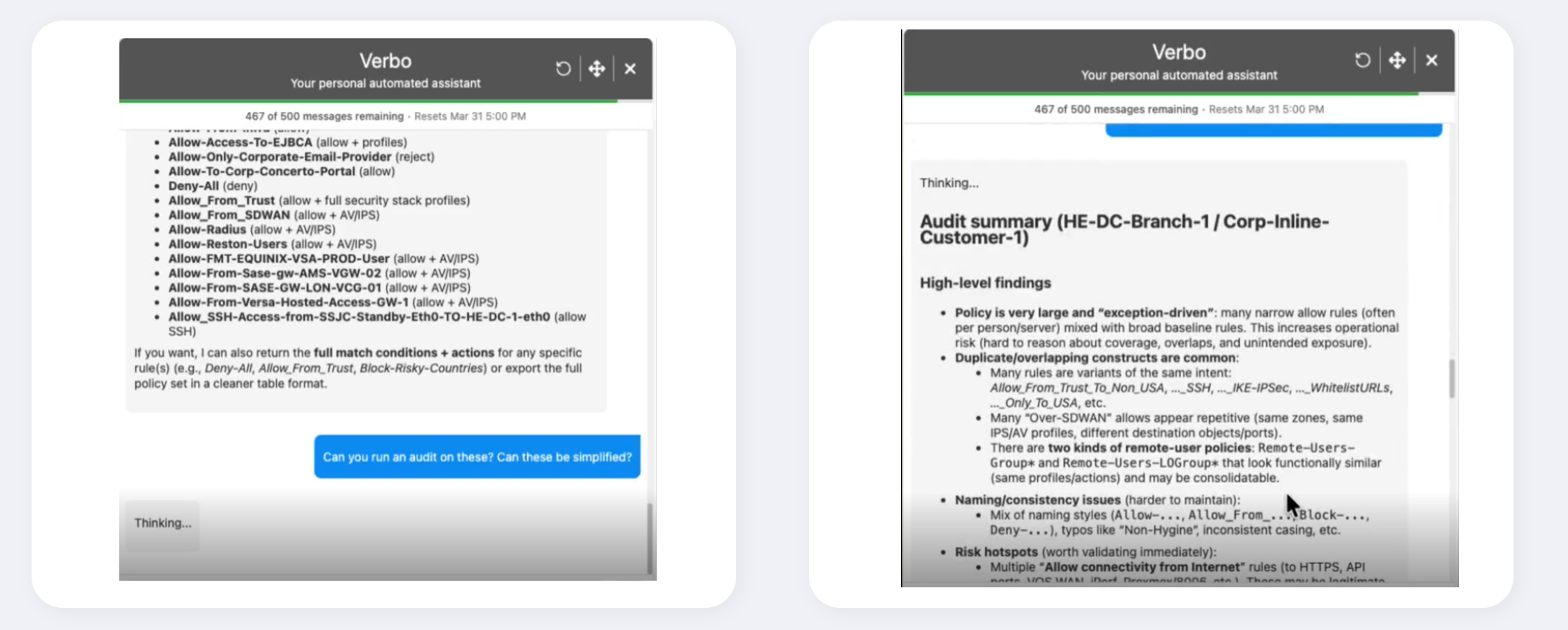
One of the most significant impacts of Agentic AI is in network operations. Traditional network management relies on manual monitoring and reactive troubleshooting. This approach is not scalable in modern environments. With Agentic AI, networks become self-aware and adaptive. AI agents continuously monitor network performance, detect anomalies, and predict failures. They can identify issues such as latency, packet loss, or congestion before they impact users. This reduces mean time to resolution and improves overall reliability.
2. Enhancing User Experience
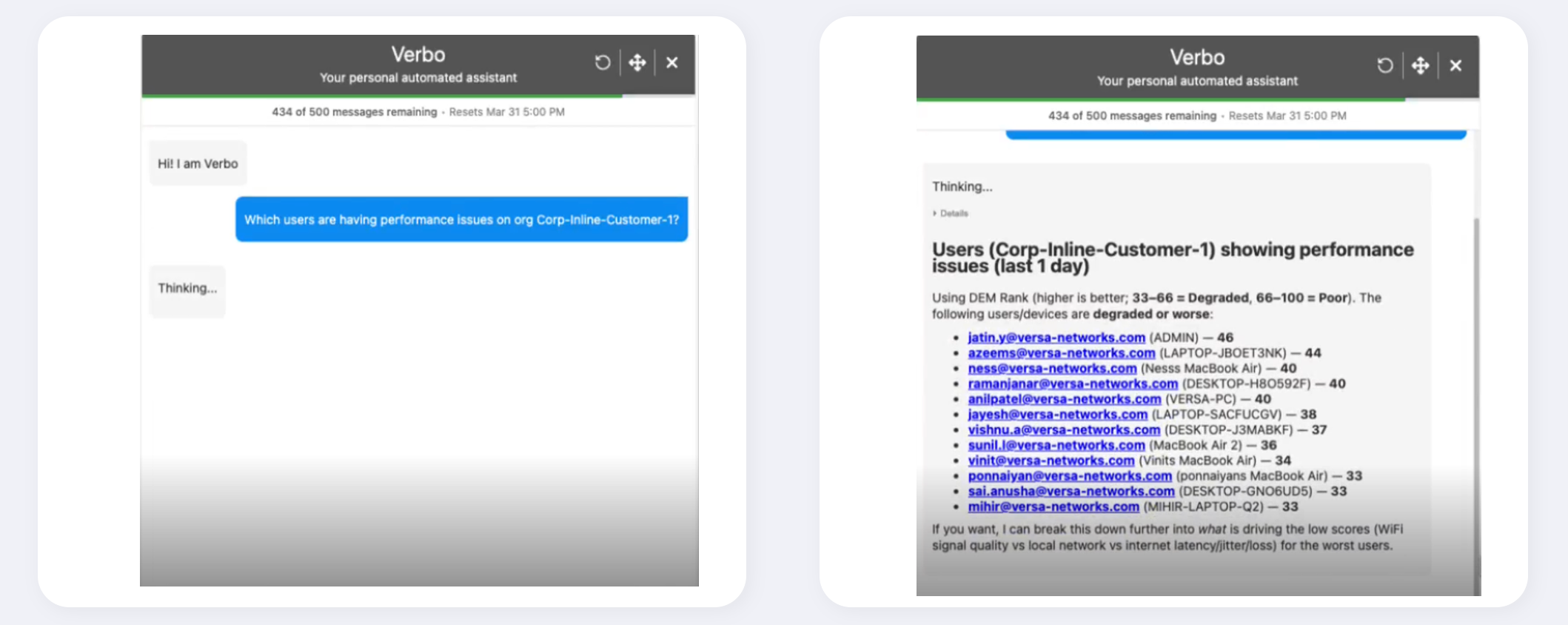
User experience is a critical but often overlooked aspect of operations. Poor application performance directly impacts productivity and business outcomes. Agentic AI enables real-time monitoring of user experience across applications and services. It analyzes metrics such as latency, response time, and availability.
By correlating this data with network conditions, AI agents can identify the root cause of performance issues. They can then take corrective actions, such as adjusting policies or reallocating resources. This ensures a consistent and optimized user experience across distributed environments.
3. Advancing Security Operations
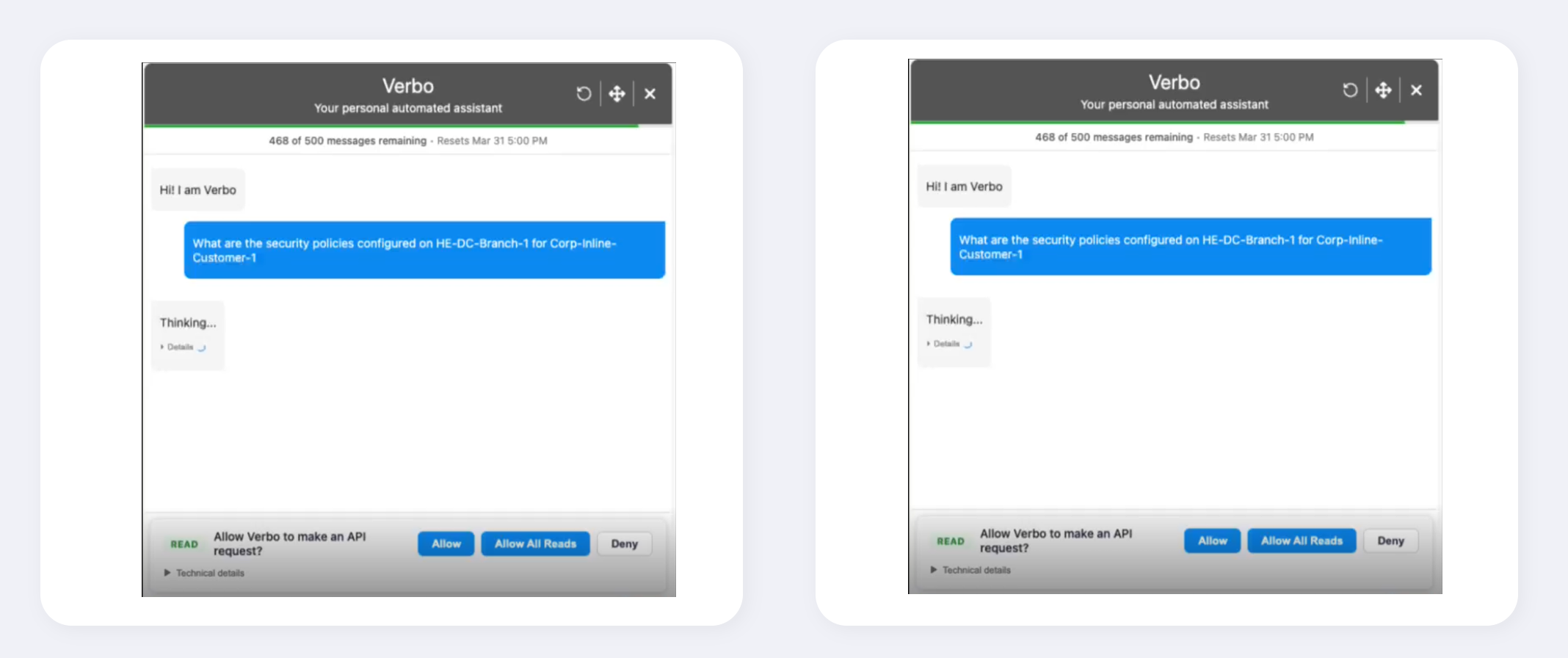
Security remains a critical component of operations. Agentic AI enhances security by enabling continuous monitoring and real-time response. AI agents analyze network and security telemetry to detect anomalies and potential threats. They can identify suspicious behavior, correlate events, and initiate containment actions. Zero Trust MCP ensures that all actions are governed and validated. This prevents unauthorized access and ensures consistent policy enforcement.
4. Driving Operational Efficiency
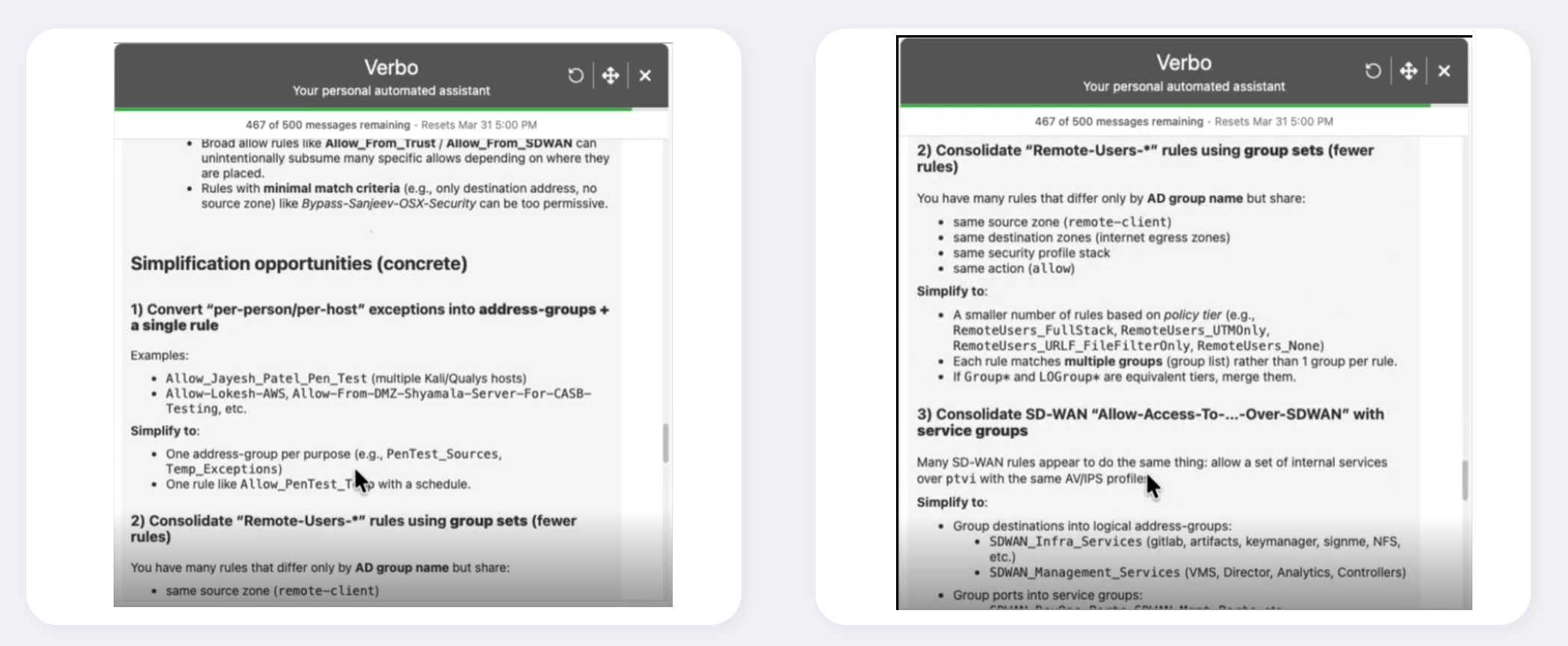
Automation reduces the need for manual intervention. Engineers no longer need to spend hours troubleshooting issues or correlating logs. AI agents handle repetitive tasks and provide guided insights. This allows teams to focus on strategic initiatives rather than operational firefighting. This improves productivity and reduces operational costs.
Why This Matters Now
Enterprise environments are becoming increasingly complex. Distributed applications, hybrid cloud architectures, and AI workloads are driving new challenges. Traditional operational models cannot scale to meet these demands. AI-driven operations offer a path forward, but only when combined with strong governance. Versa’s approach ensures that AI is both powerful and controlled. By combining Agentic AI with Zero Trust MCP, organizations can achieve autonomous operations without compromising security or compliance.
Conclusion
Transforming security operations alone is not enough. Enterprises must evolve their entire infrastructure. Versa’s Zero Trust MCP and Agentic AI architecture enable a unified model of operational intelligence. This approach improves network performance, enhances user experience, strengthens security, and increases operational efficiency. The future of operations is autonomous, intelligent, and securely governed. Enterprises that embrace this model will be better positioned to navigate complexity and drive innovation across their infrastructure. Learn more about Versa’s Zero Trust MCP here.
Subscribe to the Versa Blog
Recent Posts





The AI Memory Tax Makes uCPE Design Worth a Look
By Ponnaiyan PerumalOctober 8, 2026
Topics
Top Tags
Gartner Research Report
2026 Gartner® Magic Quadrant™ for SASE Platforms
Versa has for the fourth consecutive year been recognized in the 2026 Gartner Magic Quadrant for SASE Platforms1 and is one of only 12 vendors that met the criteria for inclusion based on the analysts’ evaluation of the VersaONE Universal SASE Platform.