For years, fragmented networking and security environments were a manageable inefficiency. AI has changed that calculus. Here’s what 525 senior IT and security leaders say it’s costing their organizations – and what they’re doing about it.
35%
of organizations suffered a security breach in the past year that was caused or worsened by poor coordination between networking and security teams.
73%
say technical complexity has delayed or derailed a critical project in the past year – making integration failure the leading cause of project collapse.
99%
have identified convergence as a recognized organizational goal – but most are still navigating the technical and human barriers standing in the way.
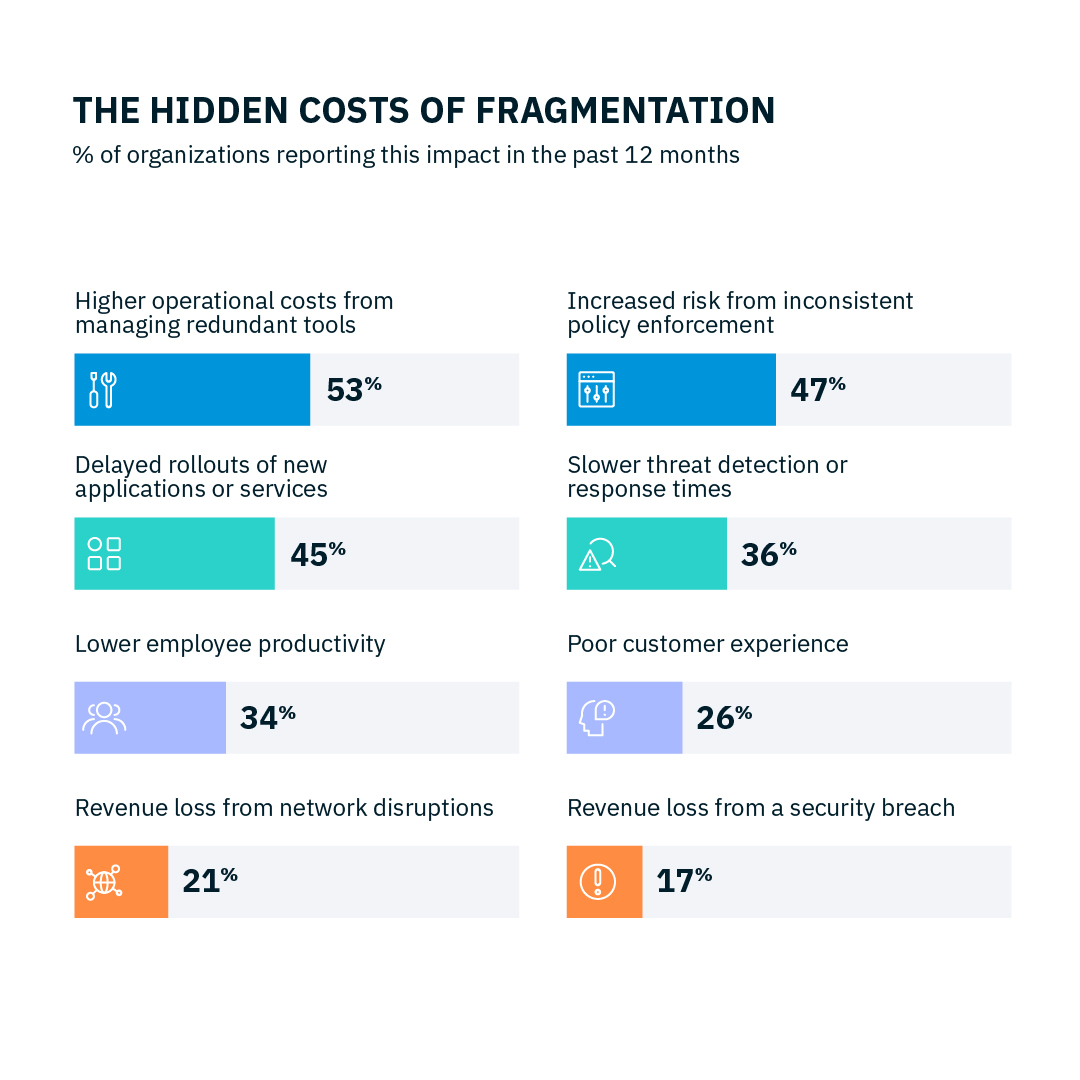
Most organizations didn’t set out to build fragmented environments. They made sensible decisions, tool by tool, over years. The result is what we call the complexity tax: the compounding cost of networking and security infrastructure that was never designed to work as a whole.
It shows up as budget consumed by redundant tooling, security gaps where coordination breaks down, and critical initiatives that stall waiting for teams to align. The 2026 State of SASE + AI report puts hard numbers on a problem most organizations have been absorbing quietly – and shows why AI is making it impossible to ignore.
Where technology & organizational dynamics collide
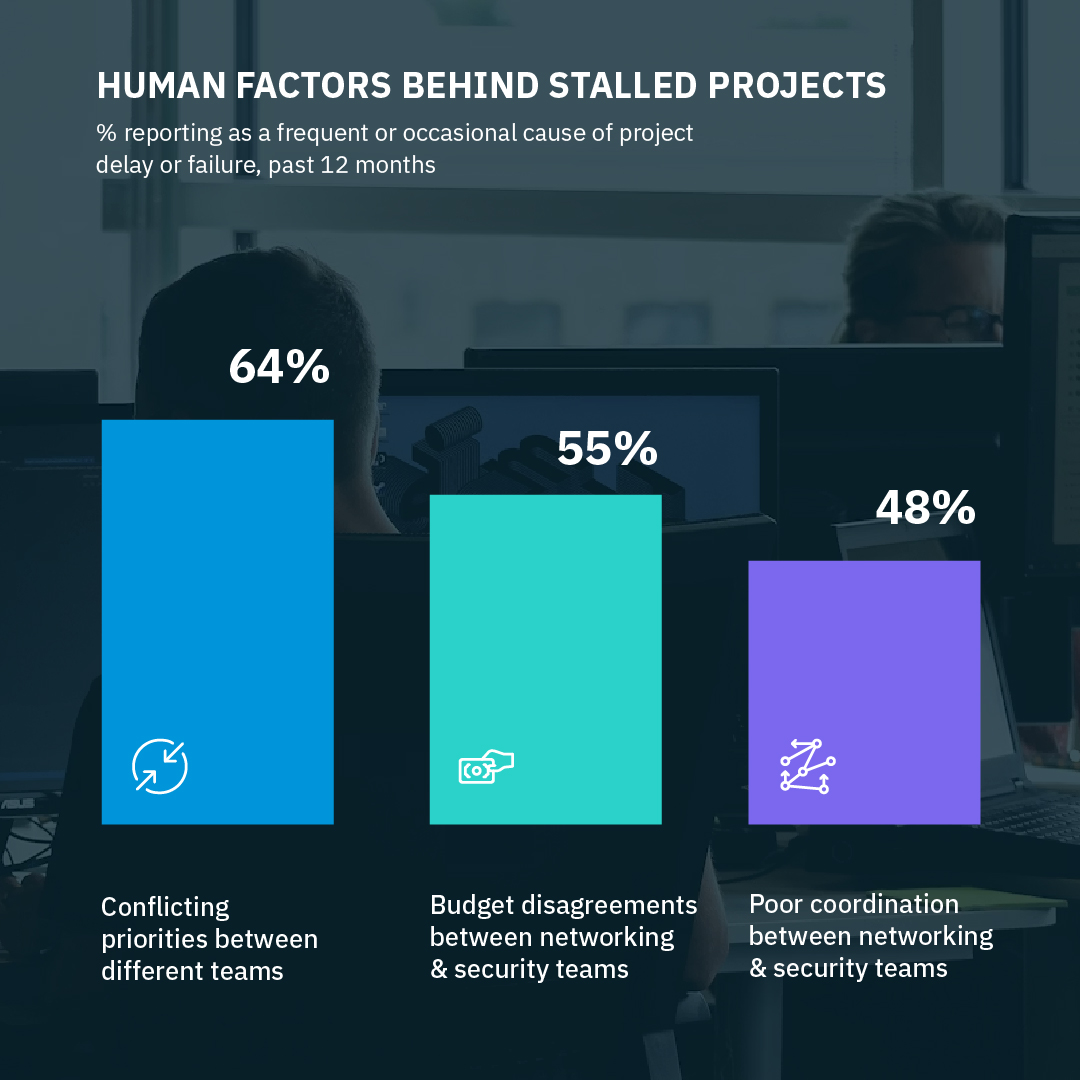
Fragmented architecture doesn’t just complicate technology – it fragments teams. When networking and security operate from different systems, different priorities, and different definitions of success, alignment becomes its own full-time job.
The organizations making the most progress on convergence aren’t only consolidating tools. They’re restructuring how their teams collaborate, clarifying ownership, and building governance that lets both sides move together. This report documents the technical and organizational barriers that derail convergence initiatives – and the conditions that allow organizations to push through them.
Nearly all leaders surveyed (99%) have named convergence a strategic priority, and 95% say AI is what’s making it urgent. The consensus on direction is clear. The execution isn’t.
Technical complexity and skills gaps top the list of obstacles. But a third of organizations also cite internal resistance to change – a reminder that convergence is as much a people challenge as a technology one. This report maps the full gap between intent and action, and the specific steps that allow organizations to close it.
“The complexity tax has been hiding in plain sight for a decade. The good news is that leaders now see the problem clearly: 99% have named convergence a strategic priority. The work ahead is to bring teams and technology together to execute.”
KELLY AHUJA, CEO, VERSA