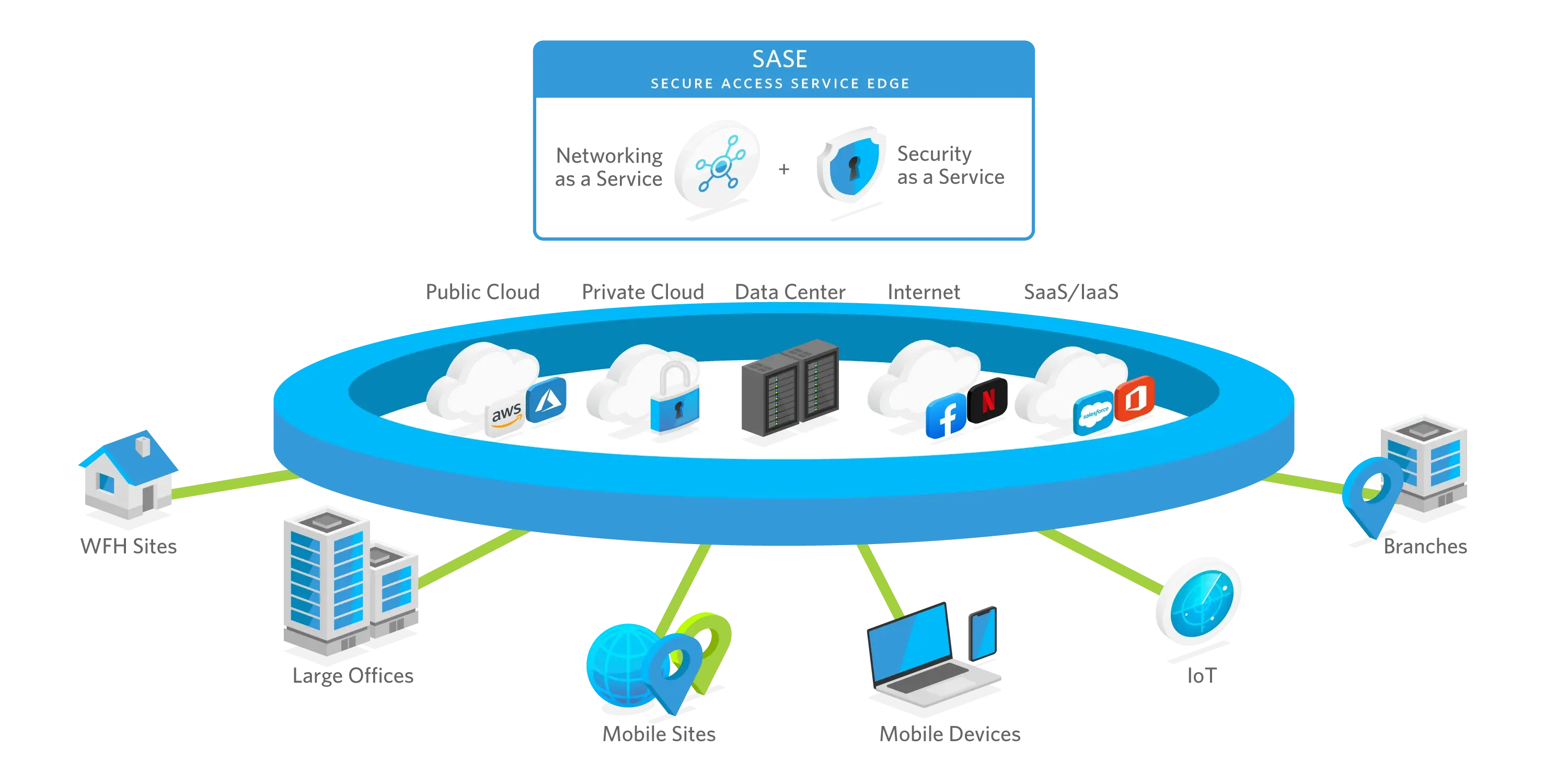
SASE combines SD-WAN networking and embedded security capabilities in a cloud-native manner that shifts security focus from traffic-flow-centric to identity-centric.
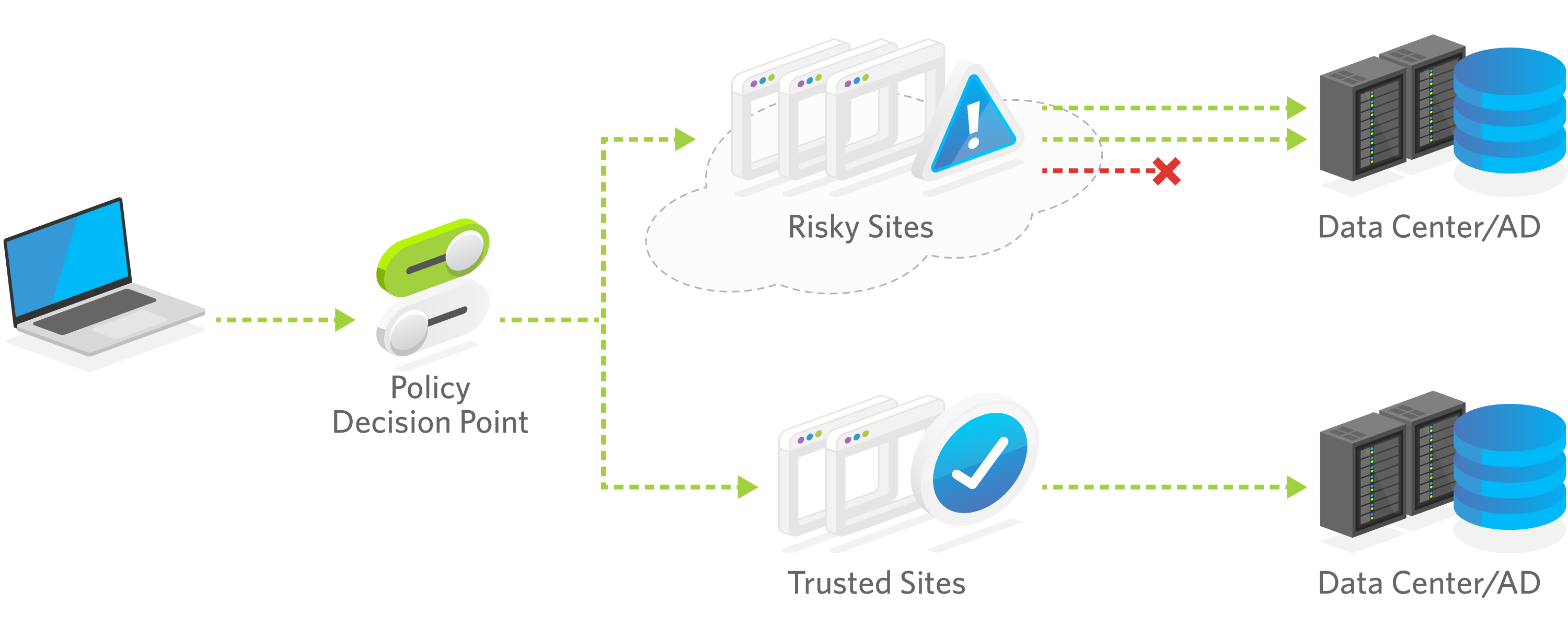
Past network architectures were designed with specific network policy enforcement points and force-routed traffic—often creating grossly inefficient aggregation points and bottlenecks along the way—through these points to enforce security checks. SASE’s approach is the exact opposite, it takes security enforcement to where the traffic flow is: the client and application endpoints, as well as strategically placed gateways and proxies along the already-established most-efficient path.
SASE enables ubiquitous and direct client-to-cloud security—based on user identity and context—fully integrated with optimal client-to-cloud WAN routing. This realizes a flexible and scalable network architecture offering embedded security as well as optimal performance along the Software-Defined Perimeter (SDP) edge.
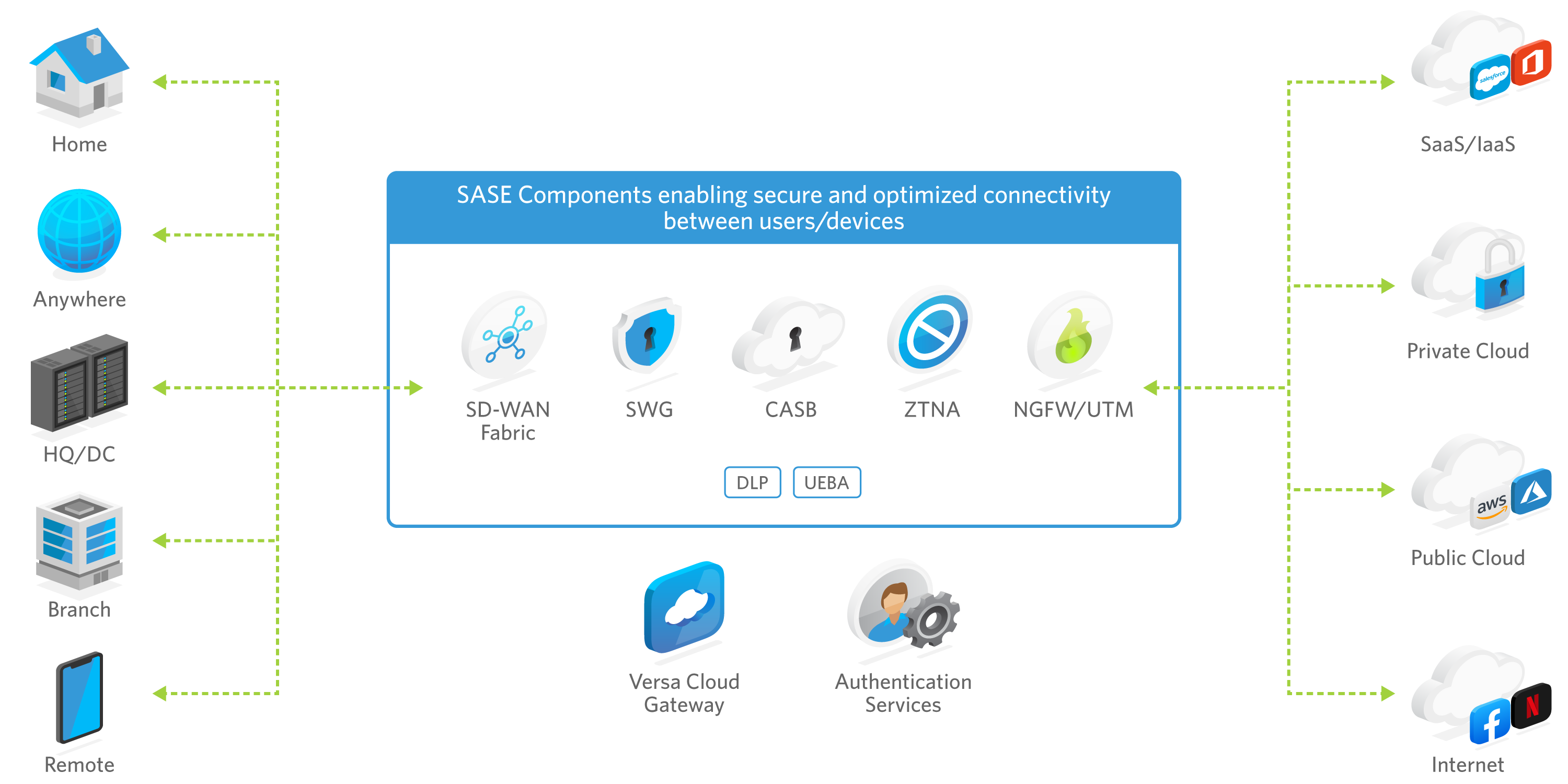
Security policies governing user sessions to access resources or applications are decoupled from the location of the user, device and resource, and are instead based on four factors:
SASE provides a secure connecting fabric between SDP client and service edge, including public and private clouds, data centers, private enterprise and government networks, internet, large offices, branches offices, home offices, mobile or temporary sites, mobile users, Work-from-Anywhere (WFA) users, mobile devices, BYOD, IoT, on-prem and off-prem locations.
SASE predicates access based on the identity of an individual, device, application, or service and the context within which they are connecting to each other. SASE provides WFA user access to all applications and data, no matter where the user is located or the transport technologies between them, or the ownership of the transport networks.
A leading SASE solution is a purely software-driven solution that has the following characteristics:
SASE converges both networking and security capabilities into a single-service cloud-native model, and includes several distinct components.
SASE is more than a single technology; it is an entire package of technologies that embeds security into the global fabric of the network so it is always available no matter where the user is, where the application or resource being accessed is, or what combination of transport technologies connects the user and the resource. Before diving in, here's a brief overview:
Secure SD-WAN technology forms the foundation of a SASE solution by enabling optimal performance and intelligent routing in a client-to-cloud network architecture. Key capabilities include:
A CASB offers products and services to address security deficits in an organization’s use of cloud services. It fills the need to secure cloud services that users are increasingly adopting, and in the growing deployment of direct cloud-to-cloud access. A CASB provides a central location for concurrent policy and governance across multiple cloud services for both users and devices along with granular visibility into, and control over, user activities and sensitive data.
A CASB delivers five critical security capabilities:
CASBs can be either on-premises or cloud-based security policy enforcement points, placed between cloud service consumers and cloud service providers to inject enterprise security policies as the cloud-based data or applications are accessed.
A cloud-based Next-Generation Firewall (NGFW) is a scalable, application-aware software solution allowing enterprises to eliminate the challenges of legacy appliance-based solutions, offering a full set of UTM features. A NGFW solution goes beyond a stateful firewall by offering features such as advanced threat protection, web and network visibility, threat intelligence, and access control. At the minimum, organizations should expect the following for their NGFW deployment:
ZTNA is a framework of technologies working together, based on the premise that nothing is trusted: not users, devices, data, workloads, locations or the network. ZTNA’s primary function within a SASE solution is to authenticate users to applications. Advanced context and role-based identity, combined with Multifactor Authentication (MFA), are essential for securing access for users and devices, for both on and off-network access.
There are two general models of a ZTNA implementation:
An SWG guards WFA users and devices against internet-sourced threats by protecting a web-surfing user device from being infected by unwanted software or malware and by enforcing corporate and regulatory policy compliance. An SWG includes:
SWGs can be implemented as on-premises hardware, virtual appliances, cloud-based services, or in hybrid mode as combined on-premises and cloud.
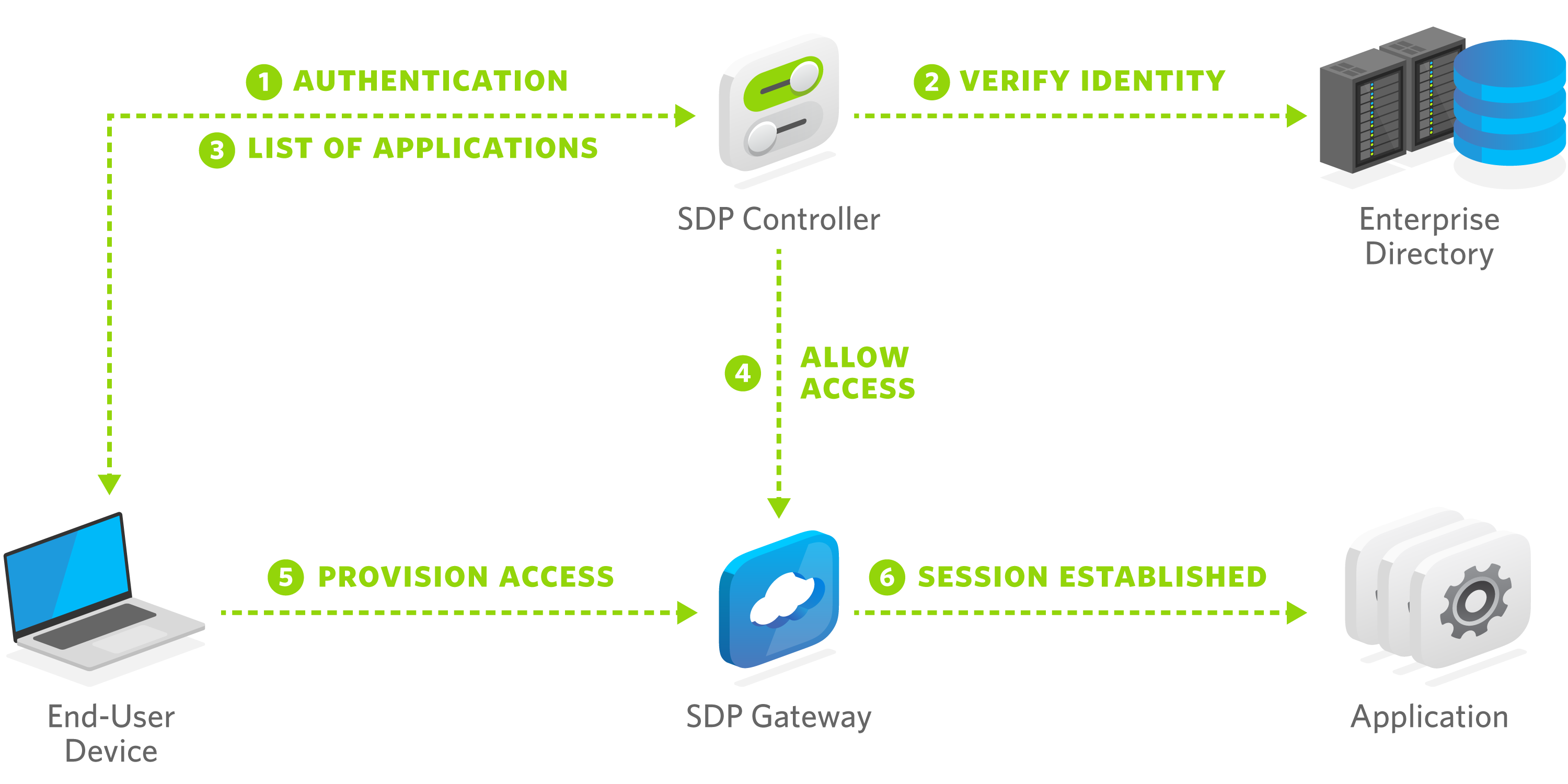
A software agent installed on the device sends its security context and credentials to an SDP controller for authentication. This model is suitable for managed devices.
An SDP (or ZTNA) connector installed along with the application establishes and maintains an outbound connection to the cloud provider. Users are challenged to authenticate to the provider to access protected applications. This model is suitable for unmanaged devices as no special software is required on the end device.
free ebook
Learn the business and technical background of SASE including best practices, real-life customer deployments, and the benefits that come with a SASE enabled organization.
Get the eBookFind more research, analysis, and information on SASE (Secure Access Service Edge), networking, security, SD-WAN, and cloud from industry thought leaders, analysts, and experts.
On-Demand Webinar: 60 min
Learn how to seamlessly deploy a blended combination of both cloud and on-premises services to create consistent services, features, policies, and configuration regardless where the service is delivered.
Learn MoreWhite Paper
Zero Trust is a new approach to security that requires organizations to fundamentally shift the way they approach identity and access.
Learn More5:30 min Video
Versa Secure Access (VSA) is the industry’s first solution to deliver the leading Secure SD-WAN services and private connectivity for employees who are remote or working from home.
Learn More